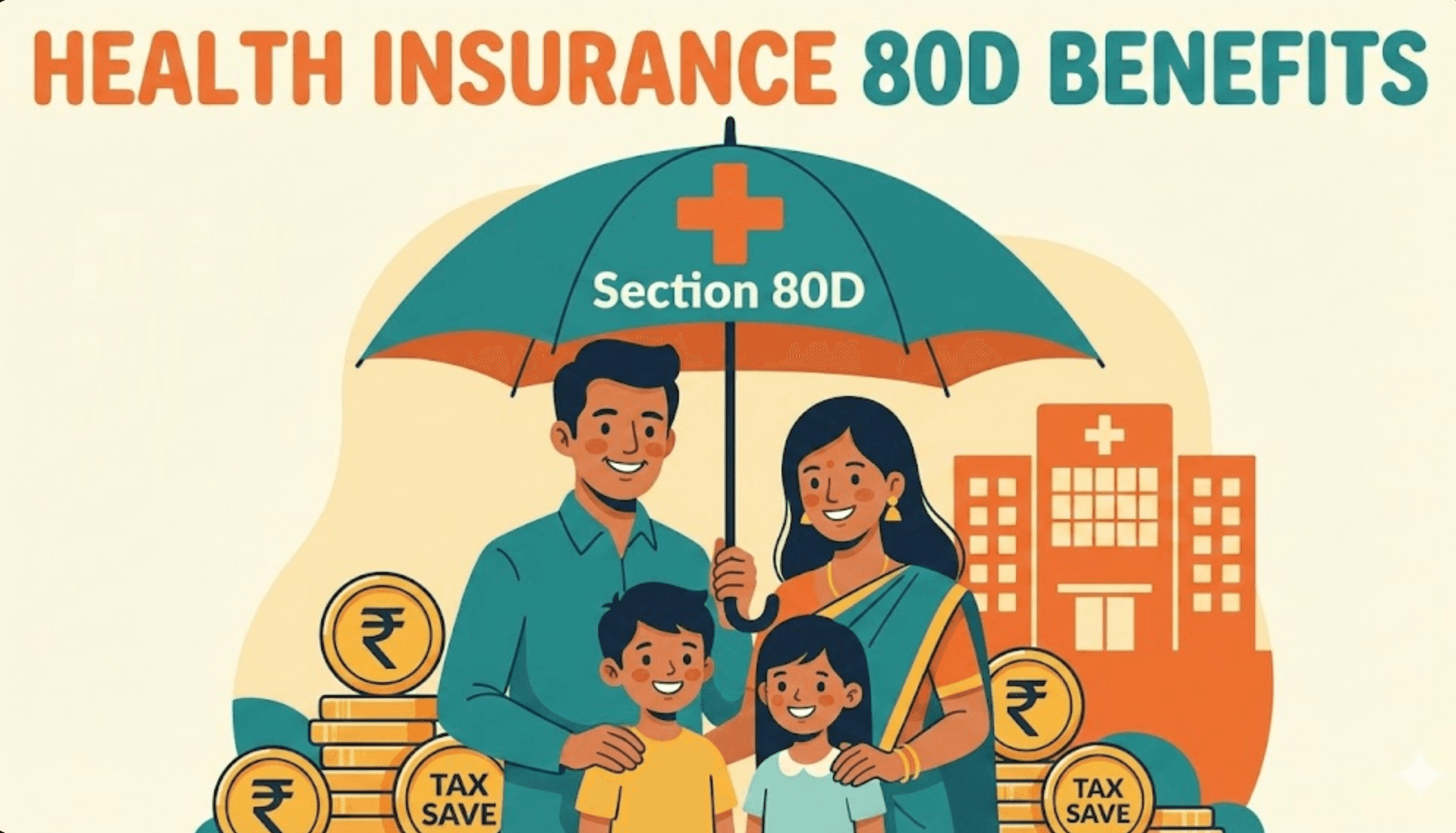
A ₹50,000 premium does not automatically save ₹50,000 of tax. It may create a deduction within a limit—and that deduction helps only where the tax regime allows it.
Buy suitable health cover first. Then calculate the actual tax benefit.
Check the regime and period
Section 80D is the familiar old-law reference for eligible health-insurance and specified medical payments. It is not generally available under the default new tax regime.
For FY 2025–26 income, use the Income-tax Act 1961 framework. From 1 April 2026, use the corresponding Income-tax Act 2025 provisions and current forms. A regime comparison should include all income and deductions, not just this one premium.
Understand the two buckets
For an eligible individual, the self/spouse/dependent-children bucket is generally up to ₹25,000, rising to ₹50,000 where the applicable senior-citizen condition is met. The parent bucket is separate, with the corresponding ₹25,000 or ₹50,000 limit.
The deduction depends on qualifying amounts actually paid and statutory conditions. Parents need not be financially dependent merely for the parent-premium provision; dependent-child rules are different.
Preventive check-ups have an aggregate ₹5,000 limit within the relevant overall deduction limits. They do not create an additional ₹5,000 over every maximum. Cash payment is permitted for that check-up component, while qualifying premiums generally require a non-cash payment method.
Specified medical expenditure for an uninsured senior citizen has its own conditions and shares the relevant overall ceiling. It is not an extra allowance over that ceiling.
GST changed, and the old advice was too broad
Covered individual health and life insurance premiums became GST-exempt from 22 September 2025. Do not automatically apply an 18% GST addition to every current health quote, or extend the exemption to every group contract and insurance product.
For earlier taxable qualifying premiums, the old blanket statement that the GST component is always excluded from the eligible premium deduction was incorrect. Apply the qualifying payment and limit rules to the actual receipt and relevant period. Do not claim a tax component that was never charged or paid.
The GST exemption also does not guarantee an identical percentage reduction in every renewal's final premium: base pricing and other contract changes matter.
Spread multi-year premiums correctly
If a lump-sum premium covers more than one year, the statutory deduction is apportioned over the relevant years. You cannot automatically claim the entire payment in the year with your highest salary, as the previous article suggested.
Keep the policy period and payment receipt. Claim only the amount you paid and are entitled to deduct; two people cannot both deduct the same rupee of premium.
Calculate the tax saving
If an eligible ₹25,000 deduction reduces income otherwise taxed at a 30% base rate, the base-tax reduction is ₹7,500, with any cess effect calculated separately. A different slab, rebate interaction or regime can change the result.
Keep cover quality and renewal affordability ahead of the deduction. Tax relief is useful only when the insurance itself meets the family's needs.
Frequently Asked Questions
Can I claim a whole multi-year premium in the payment year?+
Does every current health premium attract 18% GST?+
Sources & References
- [1] Income Tax Department: deductionsOfficialUsed for: Corrected GST exclusion and multi-year premium timing; added individual health/life premium GST exemption effective 22 September 2025.Verified: 23 Oct 2026
- [2] Department of Financial Services: insurance GST exemptionOfficialUsed for: Corrected GST exclusion and multi-year premium timing; added individual health/life premium GST exemption effective 22 September 2025.Verified: 23 Oct 2026
- [3] Income Tax Department: transition and formsOfficialUsed for: Corrected GST exclusion and multi-year premium timing; added individual health/life premium GST exemption effective 22 September 2025.Verified: 23 Oct 2026
Disclosure & Update History
This content is for educational purposes only and is not personalized financial, tax, or legal advice.
Update history
- Originally published on 10 December 2025.
- Updated 23 October 2026: Corrected GST exclusion and multi-year premium timing; added individual health/life premium GST exemption effective 22 September 2025.Rules effective: 22 September 2025.
- Latest editorial review completed on 23 October 2026.
- Sources cited on this page are reviewed during each editorial refresh.
Tags
Written by Amodh Shetty
Amodh is a personal finance educator and the founder of KnowYourFinance. He focuses on Indian taxation, investing, insurance, and household decision-making frameworks.
Editorial disclosure: The author holds investments in broad-market index funds and SGBs. This article is strictly for educational purposes and does not constitute professional investment advice.
Need Calculators Alongside the Guide?
The article stands on its own. If you want an iPhone companion for running scenarios, saving inputs, and using India-focused calculators, you can use the KnowYourFinance app.
Explore the iPhone App